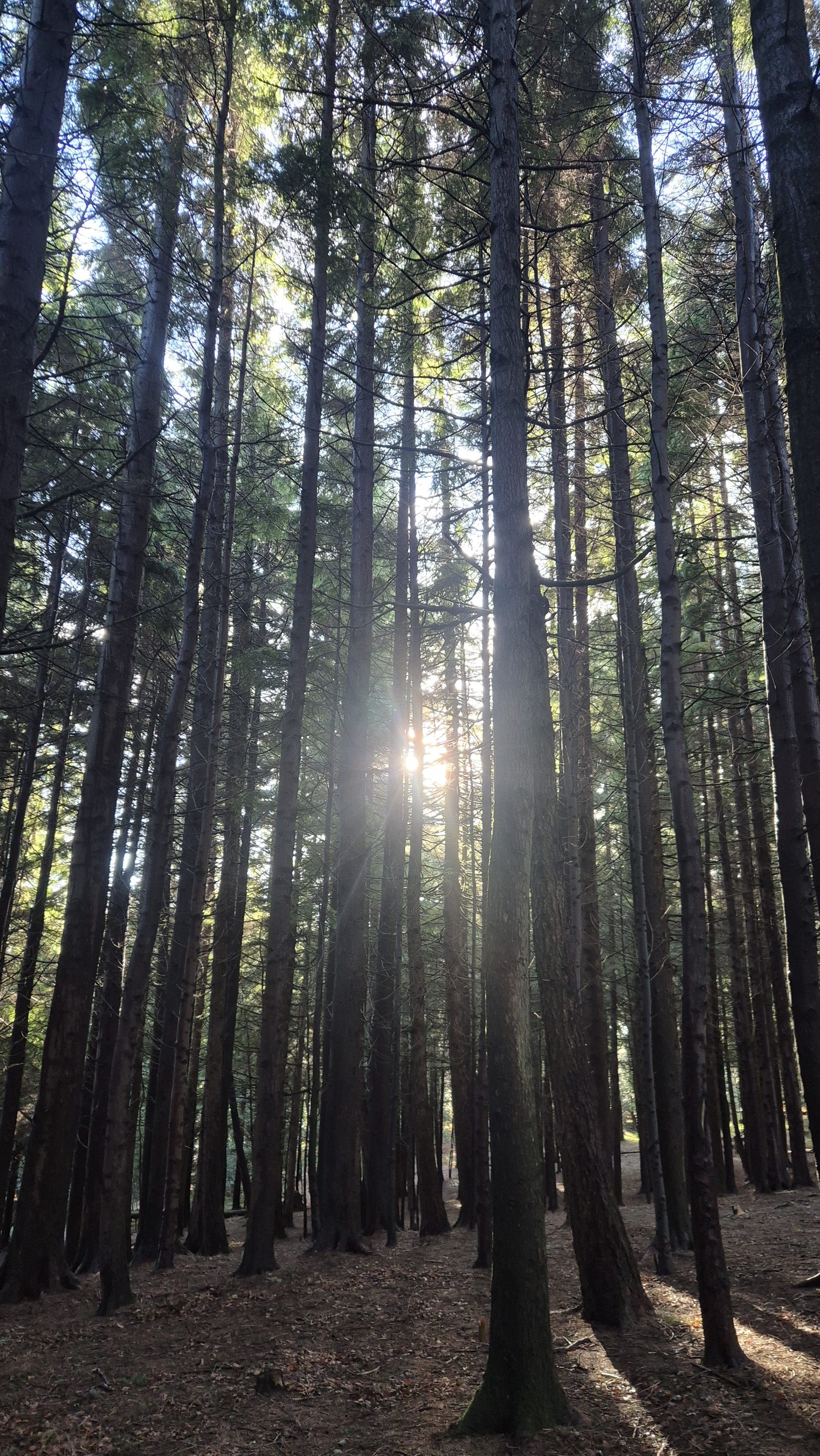
Most people think of forest therapy as a single, universal experience, a gentle walk, a few mindful invitations, and a sense of calm returning. In many ways, that’s true. The forest is generous. It offers something to almost everyone who steps into it.
But the more we learn from research and from practice, the clearer something becomes: forest therapy is not one-size-fits-all.
Different people arrive in the forest carrying different stories, different nervous systems, different thresholds of safety and different emotional landscapes. Because of that, they need and deserve different kinds of support.
At Woodland Scéalta, this understanding sits at the heart of everything we do. Each of our Forest Therapy Pathways — Grief Support, Postpartum Support, Life Transitions, Stress and Anxiety, and Cancer Support — is designed intentionally for the people who walk it. Not because they need to be separated from others, but because they deserve to be met with care that truly fits.
Here’s why that matters.
1. Not All Nervous Systems Are the Same
Someone grieving and someone living with anxiety may stand in the same forest, but their bodies are having completely different experiences.
Grief often brings collapse, heaviness, and emotional flooding. The body is under real physiological strain :- cortisol rises, sleep fragments, and the immune system weakens in ways that are measurable and significant.
Anxiety, by contrast, brings hypervigilance, restlessness, and a nervous system locked in high alert, unable to find the off switch.
Postpartum parents may feel simultaneously overstimulated and disconnected :- hormonally disrupted, sleep-deprived, and tender in ways that are difficult to articulate.
Cancer survivors often carry fatigue, fear, and a complex relationship with a body that has been through treatment.
Those navigating life transitions, including menopause, may feel a profound disorientation, as if the ground has shifted beneath an identity they thought they knew.
Research in trauma-informed care and nature-based interventions consistently shows that the state of the nervous system determines what a person can access or tolerate. The same invitation — “notice what’s moving around you” — can soothe one person and quietly overwhelm another. A healing experience must begin by recognising this.

2. Invitations Must Match What People Are Carrying
Forest therapy invitations are not neutral. They shape the emotional tone of the entire session, and when they are well-matched to the group, something shifts- people feel understood before they’ve said a word, and their nervous systems begin to soften.
What each Pathway needs
Grief
Grief asks for stillness, spaciousness, and permission not to be okay. Invitations that honour heaviness rather than rush it. Old trees, root systems, things that have simply endured. At Grief Grove, there is no agenda, no expectation to speak, and no pressure to move through anything. The forest’s own cycles of loss and renewal offer something quietly profound — a felt sense that grief and growth can coexist.
Anxiety
Anxiety prefers rhythm, grounding, and predictability. Invitations that settle the breath and draw attention gently outward to birdsong, to moving water, to light shifting through leaves. Research shows that the natural chemicals released by trees, known as phytoncides, measurably reduce anxiety and support immune function. Nature’s effortless pull on attention is precisely the rest an overstretched mind most needs.
Postpartum
Postpartum parents require softness, body trust, and the experience of being met rather than managed. Sessions that return a person briefly to their own experience, not as a parent, but simply as someone standing in a forest. At Woodland Scéalta, warm herbal tea closes each session as a grounding ritual, a small but significant gesture of care.
Life Transitions
Life transitions — including menopause — need metaphor, orientation, and a sense of movement and possibility. Hands in contact with bark, moss, soil, and water ground identity in present experience rather than comparison with a previous self. Research on forest therapy specifically for postmenopausal women has shown meaningful reductions in cortisol and significant improvements in sleep quality – outcomes that point to real physiological change, not just a pleasant walk.
Cancer Survivors
Cancer survivors need gentle pacing, low physical demand, and emotional safety. The freedom to be in a body without agenda, without monitoring, without needing to be anywhere other than exactly where they are. A review of twelve studies involving nearly 3,000 cancer survivors found that nature was rated the single most important coping resource — above medical care, psychological support, and social connection. That finding deserves to be taken seriously.

3. The Forest Is Not One Place
The forest is not a single environment. It is many environments, each with its own emotional tone — and choosing the right place is itself part of the therapeutic design.
Grief often settles best in quiet groves, ancient trees, and sheltered spaces where the sense of time slowing down is almost tangible. Anxiety responds well to open sightlines, flowing water, and gentle movement – environments where the body registers safety rather than enclosure. Life transitions benefit from varied terrain, shifting light, and seasonal markers that make change visible and natural. Cancer support requires accessible paths, stable ground, and calm sensory input. Postpartum sessions need shelter, seating options, and low stimulation – an environment that asks nothing.
At Woodland Scéalta, we work in the same woodland across different pathways, but we move through it differently depending on who we’re with. The same trees offer different things depending on how you approach them.

4. Trauma-Informed Means Responsive, Not Generic
Trauma-informed practice is often misunderstood as simply being gentle. In reality, it is much more specific than that. It means offering genuine choice at every point and reading a group’s cues in real time and adjusting. It also means understanding that different histories need different containers.
A guide’s role in this is not simply to deliver invitations. It is to hold a quality of presence that is calm, steady, attuned and that the nervous systems of participants can borrow. Stephen Porges’ Polyvagal Theory describes this as co-regulation: a guide’s genuine calm is transmitted through voice, pace, and presence, and it deepens what the forest has already begun. In a setting already rich with calming signals like birdsong, dappled light and moving water, a skilled and well-matched guide amplifies the effect significantly.
Research comparing guided and self-guided forest therapy found that guided sessions produced not only stronger emotional outcomes, but more consistent outcomes across participants. Facilitation made the experience more reliably beneficial for everyone, not just those who arrived already open to it.
A generic session cannot hold all of this at once. A responsive, pathway-specific session can.
5. Returning Over Time Is Where the Real Work Happens
A single session produces real benefits. But lasting change requires time and the research is consistent on this.
Studies show a clear dose-response relationship in forest therapy, with longer and more frequent sessions producing stronger improvements in anxiety and depression. The most effective programs run across multiple weeks, enough time for the nervous system to learn that a place is safe, for trust to build between participants, and for the shifts that happen in early sessions to consolidate into something a person can carry forward.
Early, Middle, and Later Sessions
At Woodland Scéalta, our pathways are designed with this in mind. Early sessions focus on arriving, slowing down, and building safety. Middle sessions deepen the work, with invitations shaped specifically to the group. Later sessions support integration, helping people build their own ongoing relationship with nature that doesn’t depend on us to sustain it.
This is particularly important for grief, cancer survivorship, and postpartum support, where the emotional landscape shifts over weeks and a single session can only touch the surface.

The Heart of Our Forest Therapy Pathways
One forest can hold many pathways — and many kinds of people.
Some arrive simply wanting to slow down, to breathe, and to let the forest do what forests do. That in itself is valuable. A single session of forest bathing can offer genuine rest, a shift in perspective, and a quiet reconnection with the natural world. There is no wrong way to begin.
For others, something more specific is needed. People navigating grief, postpartum exhaustion, cancer recovery, anxiety, or a life that has changed in ways they’re still making sense of – these experiences ask for a space that recognises what they’re carrying. Not because a general experience isn’t meaningful, but because feeling truly seen, arriving somewhere that was designed with you in mind, allows something deeper to open.
This is why the Healing Pathways model exists alongside our open forest bathing sessions. Not as an either/or, but as an invitation to find what fits. Some people begin with a forest bathing session and find their way to a pathway. Others know from the start what they need. Both are welcome.
At Woodland Scéalta, we simply want to offer the right kind of space for wherever you are right now.
If you’re curious, you’re welcome to browse the pathways in the menu above or simply reach out and we can have a gentle conversation about what might fit.


Serving Waterford, Kilkenny & Wexford, Ireland
Currently accepting early interest for June/July 2026 launch
Follow us
Woodland Scéalta Terms and Conditions
© 2025 all rights reserved. Designed with WordPress.
Leave a Reply